How Christchurch City Council's decision to integrate nature into urban growth has saved $14 million in capital costs and is creating a city designed to work better for everyone who lives in it.
Managing the infrastructure pressure that comes with urban growth is a constant challenge in city planning. In south-west Christchurch, the decision made decades ago to embed nature into infrastructure planning and upgrades is now delivering results. This case study speaks to what becomes possible when urban development and nature are designed to work together from the start.
Christchurch City Council developed the South-West Christchurch Area Plan covering 8,000ha across two river catchments, including the upper Heathcote River/Ōpawaho and the upper Halswell River/Hurutini.
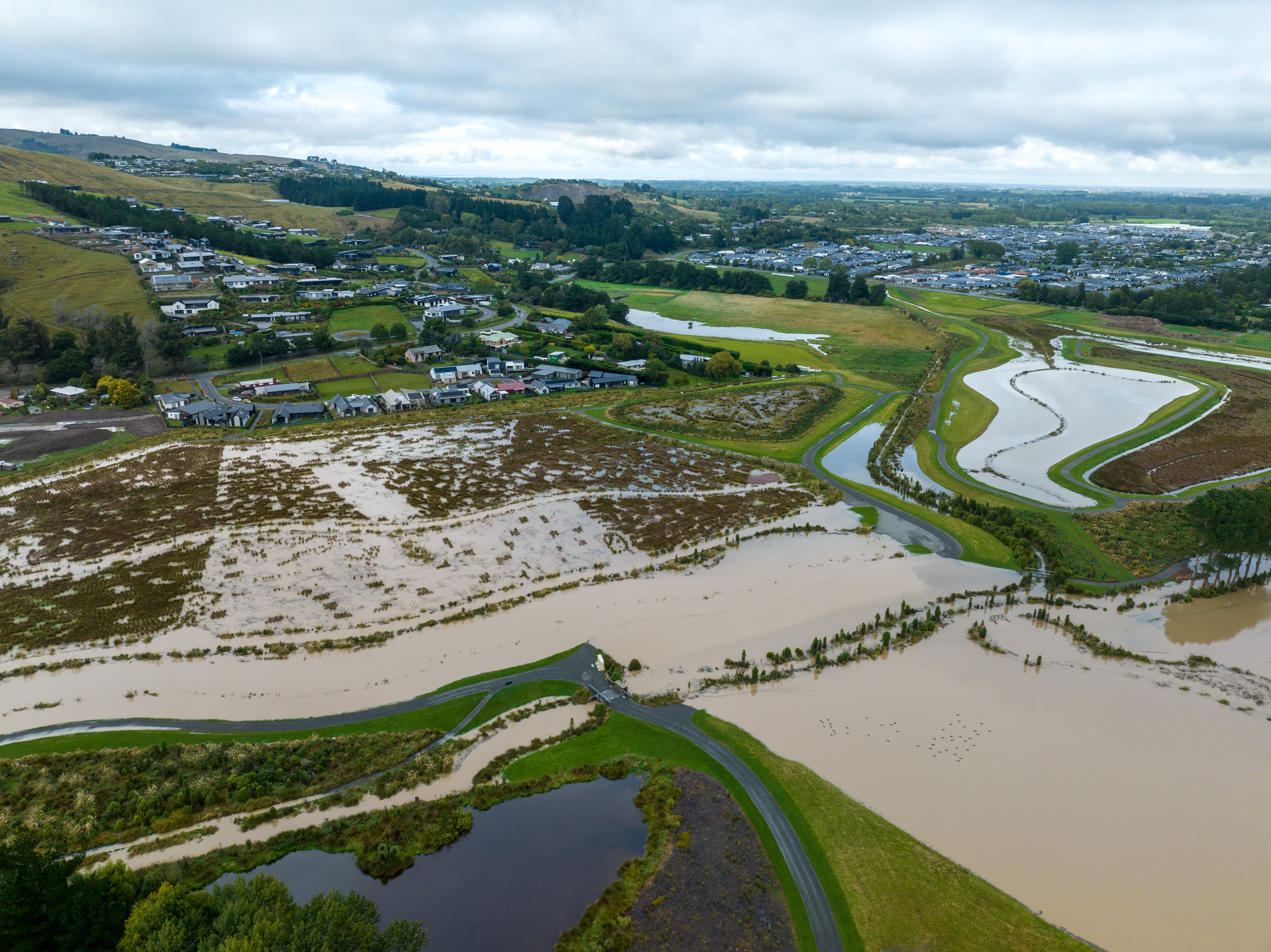
This provided a 30-year planning framework that has guided land use and public expenditure within one of the South Island's largest urban growth areas. The plan has facilitated the development of over 12,000 new homes, local commercial centres and approximately 200ha of industrial development. The Aotearoa Circle's Natural Infrastructure Plan documents it as one of six real projects where nature-based infrastructure has delivered quantifiable financial and economic results. Without deliberate planning, urbanisation at that scale would have significantly increased flood risk and contaminant loads into the city's waterways. The conditions before the project began were challenging: significant existing flood issues in both river catchments, limited water quantity or quality mitigation in the older urban areas, and riparian vegetation was already heavily modified and depleted. The natural systems that once managed stormwater had been diminished precisely when the city needed them most.
What made the response possible was the cross-sector collaboration that shaped it from the outset. Christchurch City Council developed the South West Christchurch Area Plan in genuine partnership with Ngāi Tūāhuriri Rūnanga and Taumutu Rūnanga, Canterbury Regional Council, the Ministry of Education, health agencies and Waka Kotahi New Zealand Transport Agency. That 30-year framework, grounded in a multi-valued approach to waterways established by the council in the 1990s, set a clear goal: a naturalised stormwater network that replicated the natural environment, protected water quality, improved flood resilience, and maintained natural habitats, in place of pipes, concrete channels, and pumping stations.
The Council’s Waterways and Wetlands Natural Asset Management Strategy 1999, begins with the quote “If the crown jewels of the landscape are stolen, then, when the final history books are written, it will be not just the thief who will be remembered and blamed, but also the slumbering guard.” Jeremy Pursglove 1989. This strategy explains the decision of council to take a values-based approach to the management of the natural and physical 1resources that make up Christchurch’s systems of waterways, wetland and drainage. Recognising that by understanding the natural processes linking land to water, we are able to bring to life the values important to our community. This approach also satisfies the Council’s responsibility to maintain its assets in good condition and budget accordingly.
In the case of its implementation in South- West Christchurch, pipework was assessed at twice the cost of a naturalised system, with full replacement every 150 years at $500 to $1,300 per metre and asset values depreciating over time. A naturalised system is unlikely to need replacing; rather, its asset value increases over time. Avoided pipework capital costs are estimated at approximately $14 million to date, with the scheme 83% complete. Capital investment in the South-West Christchurch Stormwater Management Plan (SWSMP) reached close to $160 million between 2014 and 2025, with total capital value estimated at over $500 million on completion in the early 2030s.
The financial savings are only part of the picture. Despite significant urban expansion and major increases in impervious surfaces, the scheme has kept the one in 50-year flood risk below pre-1991 levels. Hundreds of downstream properties have improved flood protection, council roads and utilities remain less disrupted and more consistently in service, and reduced flood risk has lowered insurance premiums for home and business owners across the area.
What the data is showing goes well beyond stormwater management. Te Kura wetland has been transformed from a farmed flood ponding area into 110ha of greenspace with walking tracks, native planting, and diverse birdlife. Across the wider scheme, between 600,000 and 650,000 plants have been established. In 2021, 45 inanga were recorded across eight monitoring sites. By 2024, 405 were recorded at just one location. That shift reflects what restored waterways and returning fish habitat can do. Birdlife monitoring is planned for 2026 and will add another layer to what the data is already showing.
The scheme contributes across all five of Te Waihanga's infrastructure strategy objectives, most strongly demonstrating two: building attractive and inclusive cities, through long-term integration of land use and natural systems; and strengthening resilience to shocks and stresses, through a naturalised network designed to last more than 100 years that has held flood risk stable through major urban growth.
What Christchurch shows is that meeting growth pressure with nature is not only possible. It is cheaper, more resilient, and built to last, and the cross-sector partnership that made it happen is a model that exists elsewhere in Aotearoa, wherever the growth pressure does too.
Want to learn more about how to assess natural infrastructure alongside traditional engineering solutions? Access our Natural Infrastructure Plan and resources here.
Case study 4: South-West Christchurch, Resilient Urban Development is one of six case studies featured in the Aotearoa Circle's Natural Infrastructure Plan, released in March 2026, developed with the support of over 200 contributors, including our valued Partners.

-48.jpeg)