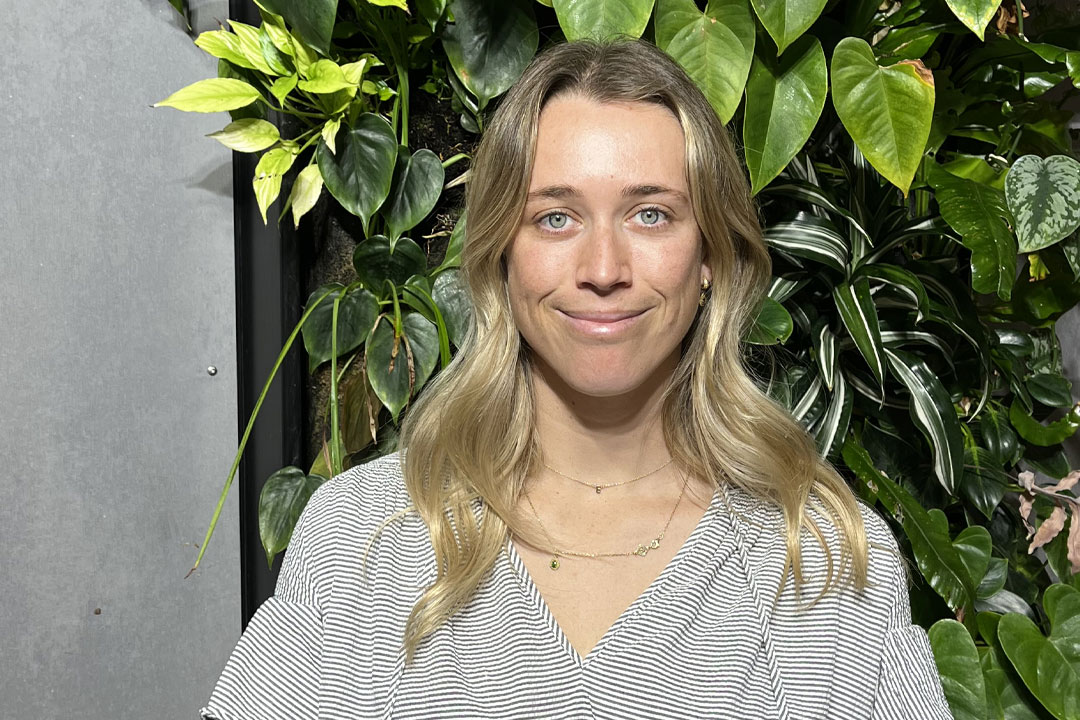
The views expressed by Emelia Forsyth are her own and do not necessarily reflect the opinions or positions of Leading Partner, Fonterra, whom Emelia represents on the Rangatahi Advisory Panel.
I grew up on a small farm in south-east Auckland, with Duder Regional Park and the coast right on our doorstep. Between the farm, the park and the coast, it was the kind of childhood that put you in awe of how everything fits together, long before I had the language to call it natural capital. Equestrian sport grew out of the same instinct. I'm a show jumper, and the sport has taught me to read an animal that can't tell you what it needs in words, and to build the kind of trust where it still follows your lead. That's turned out to be surprisingly good practice for the rest of my work.
The intersection of business and the environment
I knew before university that I wanted to work at the intersection of business and the environment, back when corporate social responsibility barely filled two pages of a textbook. That interest took me to Fonterra's graduate programme, moving through sustainability teams that ranged from reporting to customer relationships to legislation from around the world, and it's where I first heard about the Rangatahi Advisory Panel (RAP). It's also shaped the role I've grown into since. As Sustainability Programme Lead at Fonterra, I lead a portfolio of largely customer-funded programmes that support farmers to make practical sustainability changes on farm. The programmes span funding for on-farm efficiency and emissions-reduction solutions, a pilot testing the commercialisation of novel methane-reduction technology, and native planting focused on restoring nature. While each programme tackles a different challenge, they have taught me the same thing: lasting change rarely comes from a single solution or pathway. It comes from shaping the journey with people, listening to and learning from their experience, and working together to find the way forward.
What drew me to the RAP was the chance to bring a younger voice into conversations about some of Aotearoa New Zealand’s biggest natural capital challenges, alongside people who have been working on them for years. Those challenges are too complex for one organisation, one sector or one generation to solve alone, and the RAP is a rare space built for bringing those different perspectives together.
What I'm hoping to learn, and what I can bring
What I’m most looking forward to on the panel is deepening my governance experience, building on my exposure to board-level decision-making and seeing how complex trade-offs are navigated across organisations, sectors and government. I’m keen to learn from the perspectives and challenges of others on the panel, while contributing my own experience of balancing the priorities of farmers, a Co-op, customers and agri-tech providers.
I believe Aotearoa New Zealand is well placed to show that environmental, social and economic success can reinforce one another rather than always requiring trade-offs. Achieving that will take diverse perspectives, a willingness to learn, and the humility to shape solutions with the people closest to the challenge.