Most farmers know that trees shelter stock and that healthy pasture holds up in a dry spell. What they have never been able to see is what nature is worth to their business, or whether investing in it would cost money they cannot afford to lose.
As part of learning more about natural capital accounting, Circle Partners – participating in a Putting Nature on the Balance Sheet Bootcamp, heard about Australia's Farming for the Future programme. The programme set out to address what nature is ‘worth’ with real financial data from 130 farms. It found that the farms holding on to more of their original ecology were also the ones whose profits held steady through good seasons and bad.
Dr Sue Ogilvy, who led the programme is a director of natural capital accounting consultancy Integrated Futures. Farming for the Future was formed to tackle a problem many farmers face, as Sue explains. "Nature's value in production is largely invisible to farmers. And while many farmers would like to go regenerative, or they would like very much to improve their environmental performance, many of them fear that doing so would come at a cost to the farm business. And nobody had ever quantified that."
Sue shared that a number of smaller on-farm studies have already shown nature earning its keep. For example, bats preying on cotton pests can be worth around $300 per hectare per year to irrigated cotton, a crop with a gross margin of roughly $3,000. But Sue adds farmers working on thin margins need more than isolated examples. “They need to know whether investing in natural capital will improve the whole business, and by how much”.
To find out, the pilot recruited 130 farms across five Australian states and compared their natural capital with their financial and production performance across multiple seasons. Rather than reduce nature to a single score, the team broke it into elements a farmer could act on in a paddock: shade and shelter, pollination, pest control, forage, and the overall ecological condition of the farm.
Three relationships stood out.
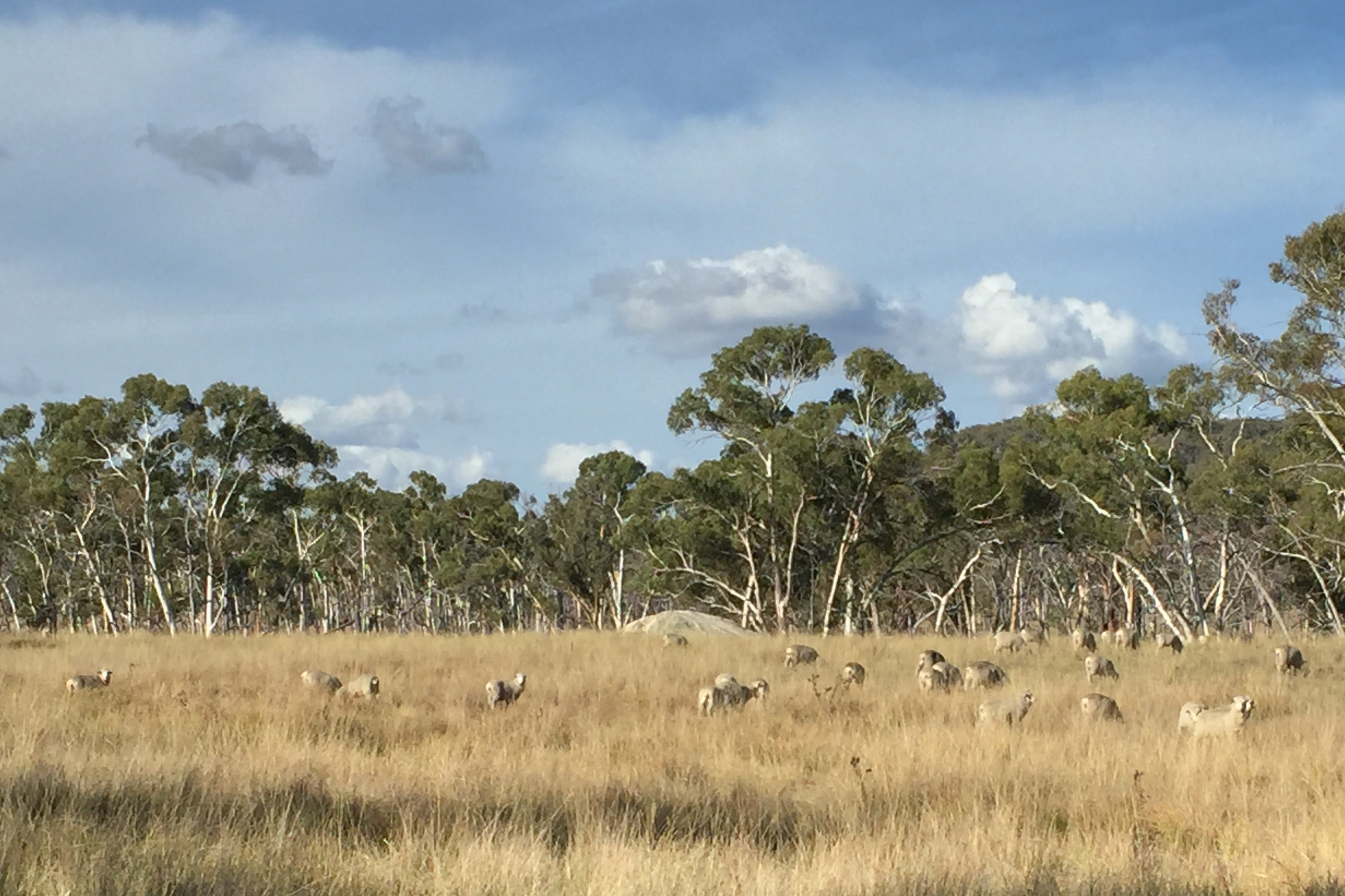
- Livestock gross margin rose with proximity to trees, a measure of how much shade, shelter and habitat each part of the farm receives, and kept rising up to around 20 to 30 per cent canopy cover.
- Whole-farm profit rose with ground cover up to a threshold, after which more cover made little difference.
- The biggest surprise was resilience: the more of a farm's original biodiversity that remained, the more stable its profit was relative to the rainfall it received, a strong and statistically significant relationship.
Sue is careful about what the data can and cannot say. She acknowledges the findings are correlations, not yet proof of cause, and results varied between regions. They do, however, line up with what is already understood about how ecosystems support production.
Put those relationships into accounting terms and the numbers become hard to ignore. Using the income approach from financial accounting, Sue illustrated how trees delivering around $30 per hectare per year in benefit across a 4,000 hectare farm could be worth about $1 million as a business asset. That value currently appears nowhere: not in the farm's profit and loss, and not in its property valuation, where property valuers might reduce the property value because there's lots of trees. Valuers need rigorous evidence before they can change their approach, and Sue says early conversations with them have been very positive.
The same analysis shows where investment in nature pays the farmer and society at once, called the double dividend zone. When directing public or private money, that distinction matters. Where farmers have a private incentive to deliver a public good, they don’t need to be paid to do the work because they already share in the benefit; what they need is training and skills. Where the data shows a genuine cost to the farmer, the support required changes, either ongoing payments to close that gap or investment in research and market premiums that change the economics for the farmer.
Sue was direct about what this could mean for Aotearoa. "We'd love to do a Farming for the Future in New Zealand, and we reckon you guys would be able to do it really quite easily."
Much of that confidence comes from a design choice she credits as the programme's smartest move: bringing farm accountants, consultants and benchmarking providers into the research from the start. They collected the financial data, and they are the people farmers already trust for advice. "I still think that was the cleverest thing we ever did," she says. Those advisers now want to add natural capital to their routine business advice, which is how the work becomes normal practice rather than a research project that runs only when funding allows. She pointed to New Zealand-based Figured, accounting software built for dairy farmers, as the kind of platform that could make the analysis routine.
Find out more at Account4Nature, including how to register for our next Putting Nature on the Balance Sheet bootcamp and useful natural capital accounting tools and resources.