Climate Adaptation
Seafood Adaptation Toolkits

This comprehensive and impactful suite of resources was developed to guide decision making and adaptation across the sector and within individual organisations. This collaborative work is the result of a shared vision for a thriving marine environment, blue economy and seafood community for Aotearoa New Zealand.
The Seafood Adaptation Toolkits provide practical, action-focused guidance for implementing climate adaptation plans.
Designed for those leading adaptation across the inshore, aquaculture, and deepwater sectors, the toolkits support long-term resilience and competitiveness in a changing climate. Developed collaboratively with a sector-led Implementation Group, the toolkits reflect real-world needs and priorities, ensuring they’re ready to put into practice.
Recognising the vital and ongoing role of iwi in Aotearoa’s seafood sector, The Aotearoa Circle commissioned KPMG to develop resources to help organisations embed Tiriti-based approaches.
These documents offer a clear overview of the legal and political context of Māori in the sector, alongside actionable guidance to support the meaningful implementation of the Seafood Adaptation Toolkits while upholding Te Tiriti o Waitangi.


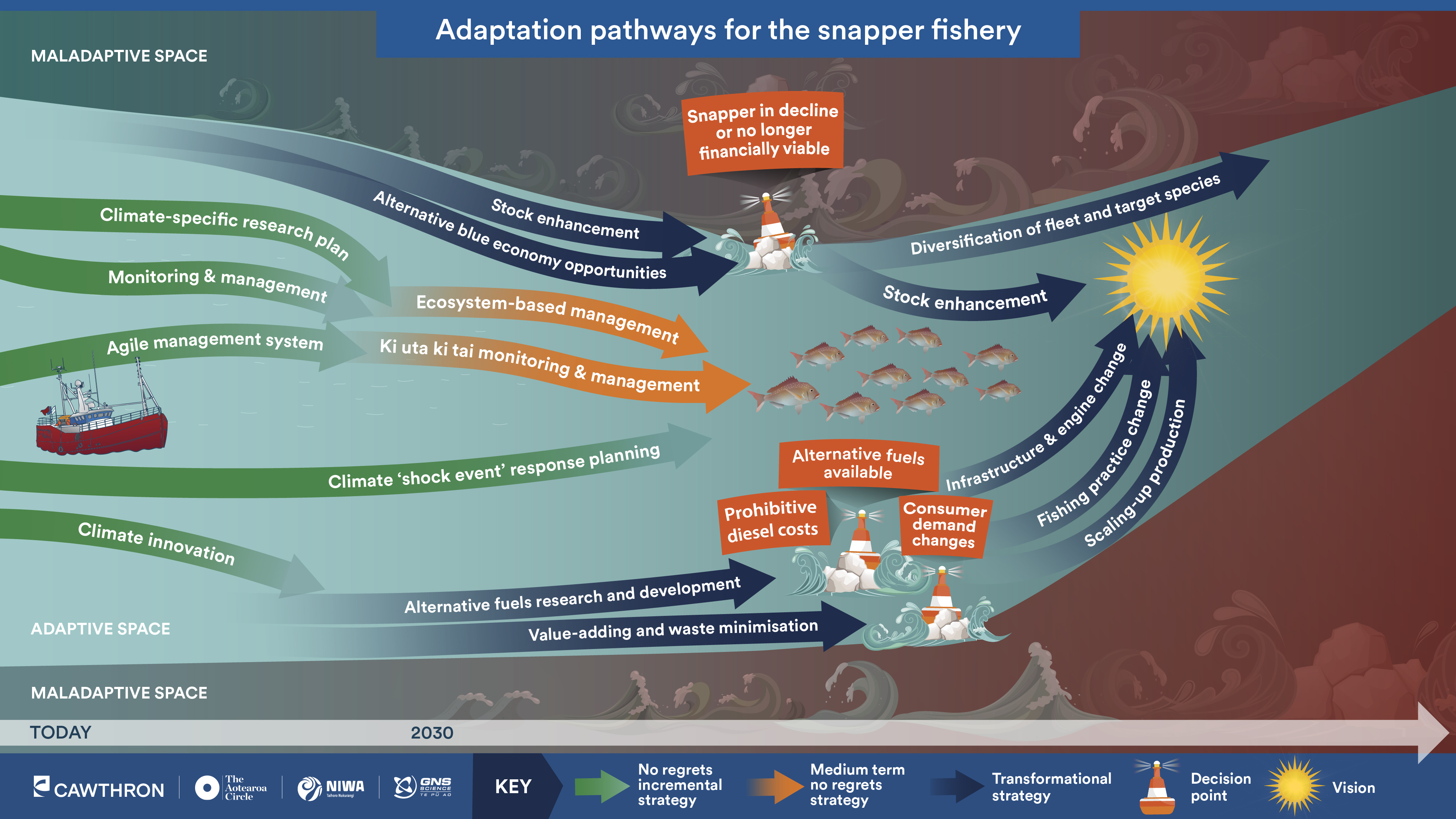
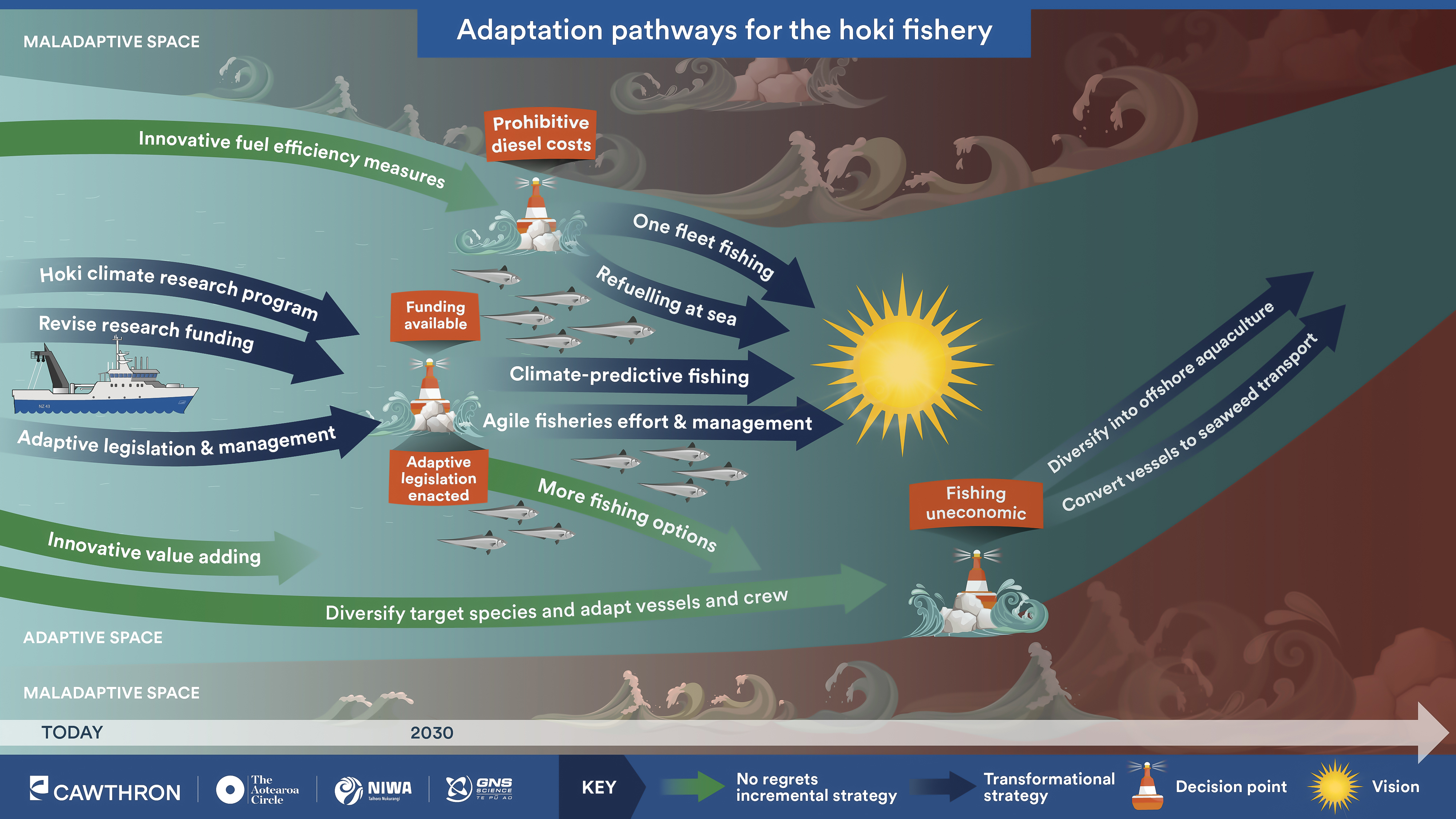
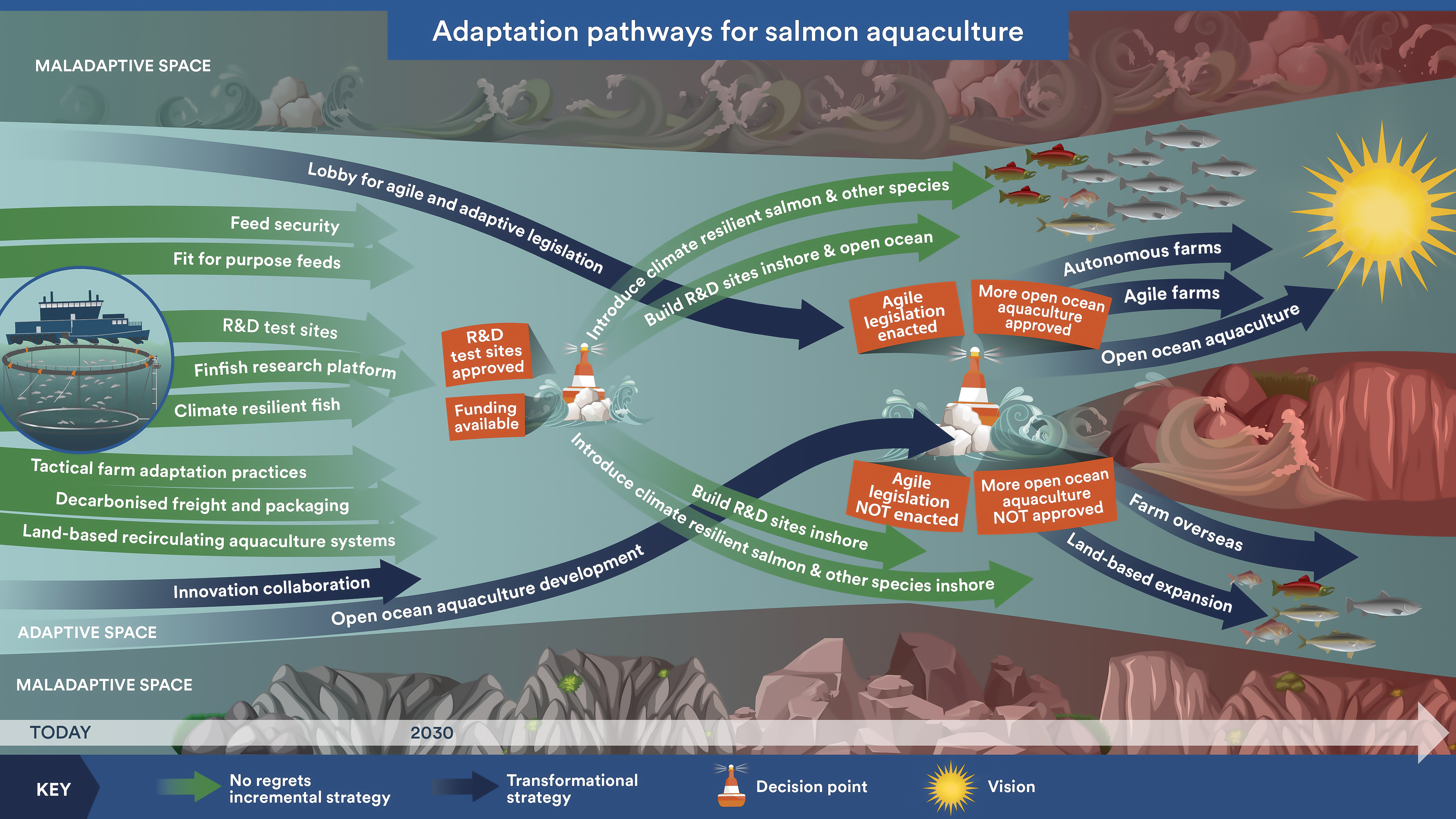
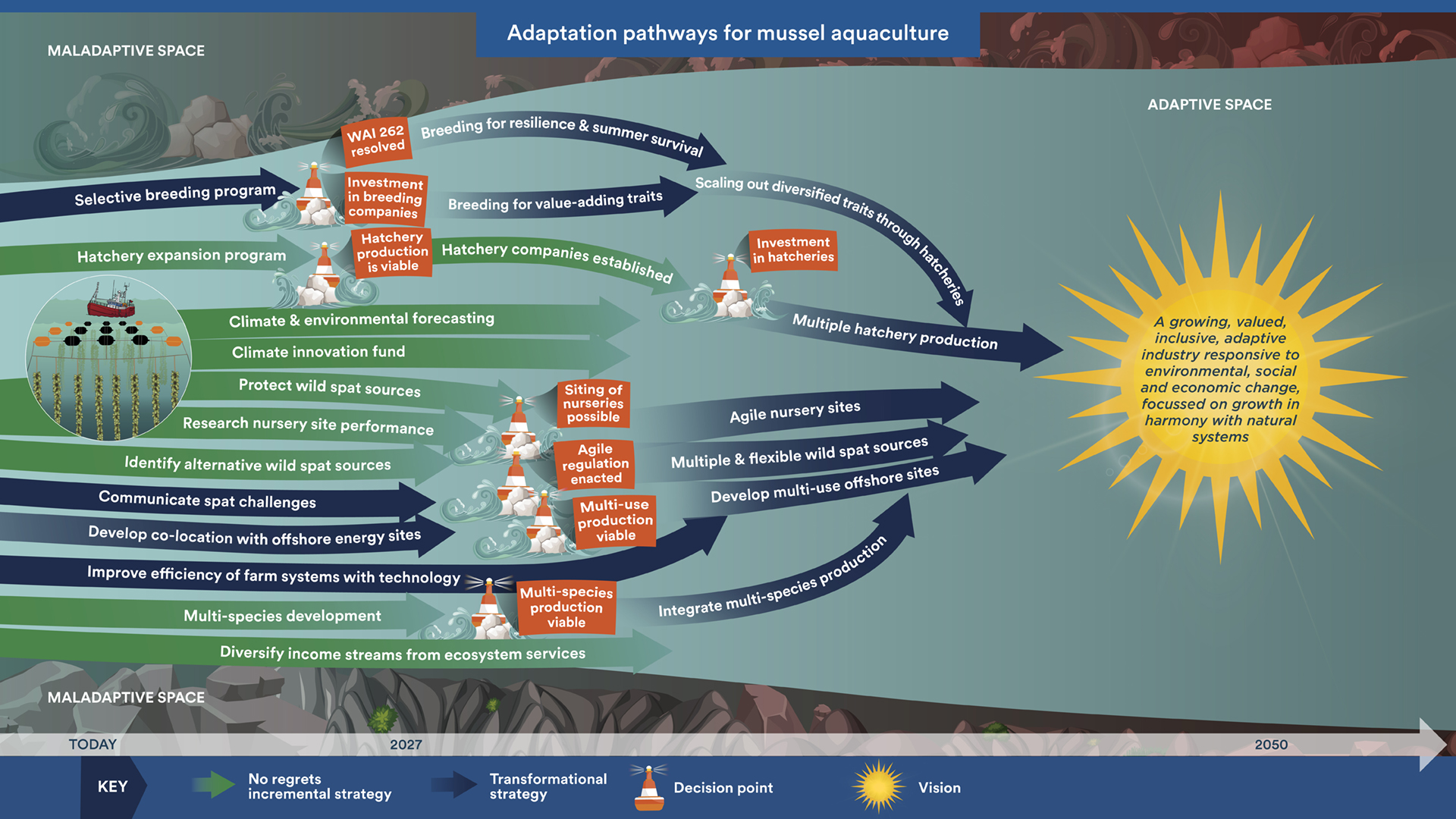
The strategies in the Seafood Sector Adaptation Toolkits were identified through a series of in-depth workshops led by Cawthron Institute, focused on addressing climate challenges across three key species.
Recognising the distinct pressures on snapper, hoki, and salmon, sector stakeholders participated in the Climate Adaptation Pathways Planning Process, facilitated by Cawthron Institute, and Earth Sciences New Zealand (formerly NIWA and GNS Science).
Together, they co-designed strategies ranging from immediate actions to long-term, transformative responses to climate change. These insights were captured in adaptation pathway reports and summary graphics, forming the foundation for the toolkits.












This webinar highlighted how collaboration and long-term thinking have unlocked practical seafood adaptation strategies, tackled systemic barriers, and built climate readiness with lessons for other industries.