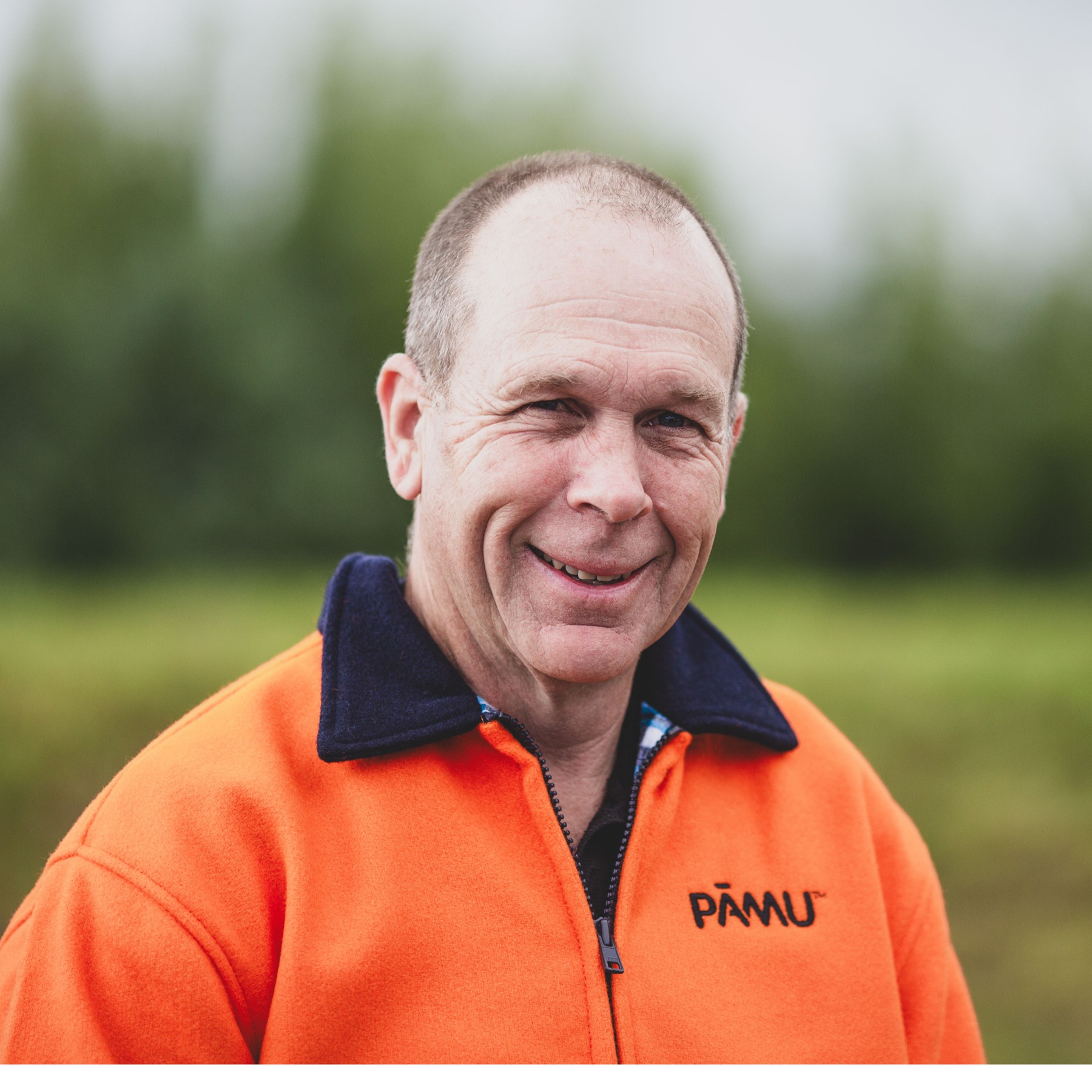
Pāmu is demonstrating a new way to value something that's been sitting quietly on most farms for decades: regenerating native forest that is already protecting hillsides and waterways. In this month’s Partnership Perspective, Chief Executive Mark Leslie explains how an innovative leasehold model is turning existing forest into funded restoration, and what it signals for how New Zealand businesses can begin recognising and accounting for the natural capital they depend on.
In farming, there is an unhelpful assumption built into how we judge land: productive or unproductive, measured against strict output parameters like stock units or tonnes per hectare. I have spent my career close to the land, and from my experience, I push back on that framing. Judged purely on output, a retired hillside or a fenced wetland looks like land doing nothing. But, judged on what it delivers, that same land is holding a slope together, so it doesn't slip in a storm, filtering sediment before it reaches a catchment or providing habitat that supports biodiversity. None of that shows up in a yield figure, but all of it is productive whether or not a ledger currently has a line for it.
At Pāmu, we are custodians of several hundred thousand hectares of land across the country, including around 13,000 hectares already protected under QEII covenants, some dating back decades. That scale brings a particular responsibility and a unique opportunity. Retiring land is a positive step that gives nature a break, but for it to be truly beneficial, it needs ongoing investment. Pests must be kept out, and weeds need to be controlled. Without that continued cash flow, the biodiversity benefit that a covenant was meant to protect simply erodes again.
Closing that funding gap is what our new Nature Reinvestment Initiative is about. How will it work? Pāmu holds a soon-to-be QEII covenanted native forest block of around 600 hectares in northern Hawke's Bay. Through a leasehold arrangement, BNZ can recognise that land's carbon removals on its own balance sheet, helping meet its emissions goals, while Pāmu earns revenue from a native asset that already exists rather than planting from scratch. As a result, most of that revenue can go straight back into the efforts to increase the carbon sink, funding the management that turns that forest into a thriving ecosystem.
This is an exciting and genuinely new model. Existing carbon mechanisms tend to reward new plantings, requiring upfront capital and a number of years before any return, while native forests planted before 1990 have historically sat outside the Emissions Trading Scheme regardless of their condition or value. Our approach captures the value of regenerating native forest for what it is already doing today, with the rigour to back it up: such as CarbonCrop's measurement and traceability platform, and alignment with the Greenhouse Gas Protocol's Corporate and Land Sector and Removals Standards, ISO 14064-1, and Toitū Envirocare's Net Carbon Zero requirements.
Separately, we are also exploring large-scale native afforestation with True Nature and a nationwide partnership with MPI, farmers and companies across the red meat sector to explore virtual fencing farm systems, where cattle have wearable technology, enabling stock to be kept out of waterways without losing the grazing land around them. Though each initiative is different, they are all solving the same problem: helping farmers run productive, profitable operations and improve the natural capital they depend on, rather than treating the two as competing demands.
Recognising the value of nature is something all organisations can consider. The opportunity is bigger than one farm, one forest, or one partnership, and the more landowners, businesses and investors who engage with it, the faster it becomes a credible, mainstream part of how New Zealand values its land.
At Pāmu we are considering the integration of natural capital concepts into our business processes and decision-making. As we continue to test, refine, and build confidence in the methodology, we will share our experiences, including with those attending The Aotearoa Circle’s Putting Nature on the Balance Sheet bootcamp.
It is, to me, an interesting time. Farming, finance and technology are converging in a way that makes it possible to stop treating productivity and sustainability as separate questions. New Zealand still must grow food and earn a living from the land. Increasingly, we can do both at once and value the native forests already standing while we do.

-48.jpeg)
-47.jpeg)