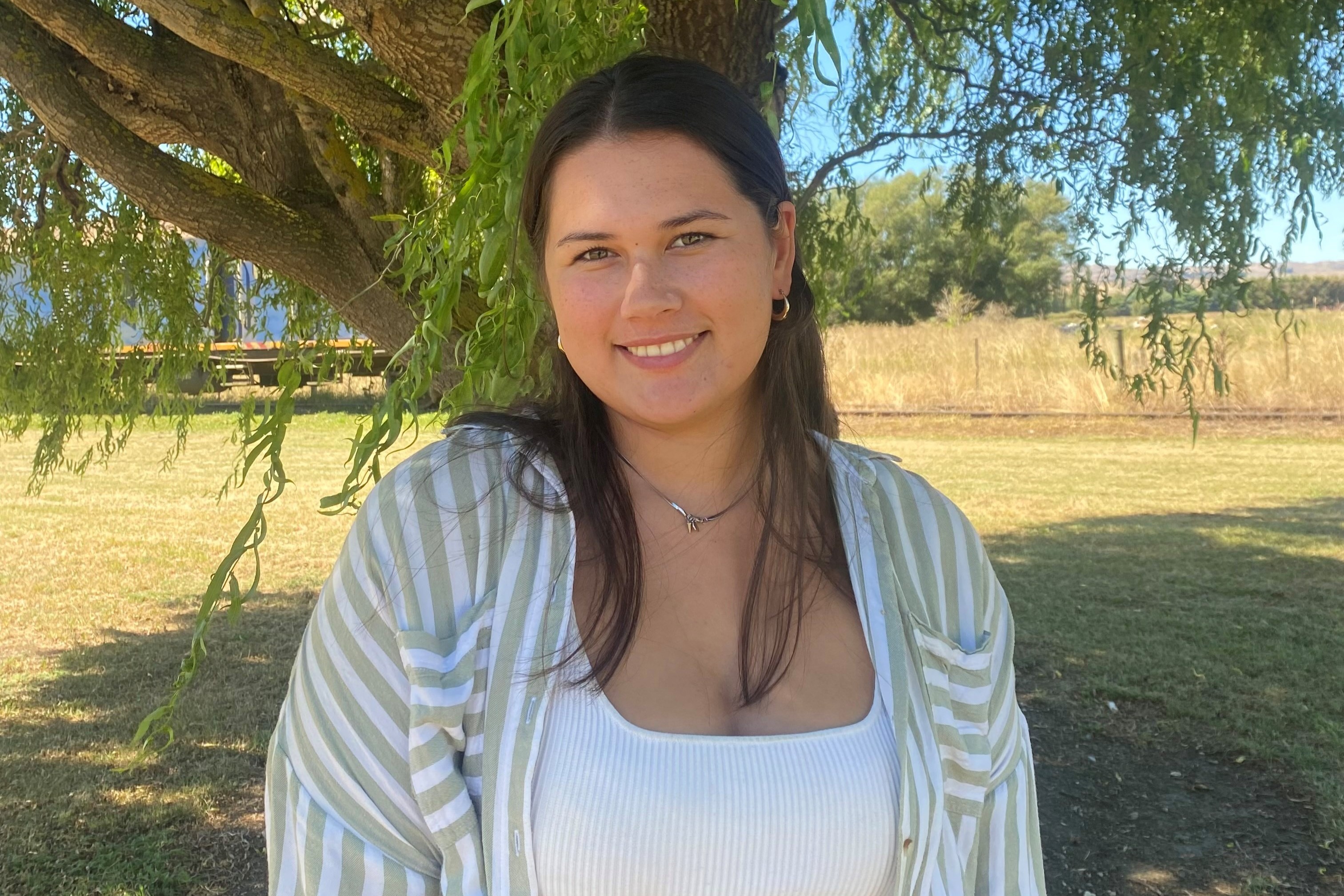
By Ginny Ellis-Kirifi, RAP Alumni (Ministry for the Environment), Sir Peter Blake Trust
The views expressed by Ginny are his own and do not necessarily reflect the opinions or positions of our Leading Partner, Ministry for the Environment, whom Ginny represented on the RAP.
When I joined The Aotearoa Circle’s Rangatahi Advisory Panel (RAP), I was working at the Ministry for the Environment and still early in my career. Being part of the RAP came at a time when I was learning how to navigate government spaces as a young woman, and it played an important role in shaping how I understood my place - and my voice - in those environments.
Now based in Tāmaki Makaurau, Auckland, I work as a Programme Manager at BLAKE (formerly Sir Peter Blake Trust), delivering environmental education programmes for Rangatahi across Aotearoa New Zealand. My role focuses on creating opportunities for young people, particularly those who might not otherwise have access to connect with nature through hands-on, outdoor experiences. Looking back, my time on the RAP has stayed with me, influencing how I approach my mahi and how I support young people to step into their own leadership.
The people made the experience
What stands out most from my time on the RAP is the people. I’m a big people person, and being part of a panel made up of young people from completely different sectors was incredibly meaningful. We came together across the year, learned from one another, and built strong relationships.
Beyond the kaupapa, we genuinely got along. I loved being able to spend time together in person, and those connections didn’t end when the panel did. Some of those relationships have continued well beyond the RAP, which has been really special.
Bridging government and business
One of the key insights I took from the RAP was a much clearer understanding of how government and business intersect. While I was already working in government at MfE, being on the RAP helped me better see how those relationships functioned in practice - and how important they are in addressing environmental challenges.
The Aotearoa Circle’s role in bringing together public and private sector thinking highlighted for me that environmental issues can’t be solved in isolation. They require holistic approaches and collaboration across systems, something that has continued to shape how I think about environmental work.
Learning through unfamiliar and complex work
Some of the content we engaged with during the RAP was challenging for me - particularly the more technical material. It wasn’t work I had been exposed to before, and at times it felt difficult to fully grasp.
One piece of work that stood out was the Agri Adaptation Roadmap. What I found most engaging was hearing the different perspectives around the table, especially from those with farming backgrounds. Even when I didn’t feel equipped with answers myself, listening to those conversations and seeing how varied perspectives shaped the discussion was incredibly valuable.
Young people contribute meaningfully just by being young
A defining lesson from the RAP was understanding that I didn’t need to be an expert in every topic to contribute meaningfully. Our role wasn’t to be specialists in agriculture, economics, or climate science - it was to bring our perspectives as young people.
That idea really stuck with me. By allowing young people the space to contribute meaningfully to environmental conversations, we get to hear different lived experiences, generational thinking and new ways of seeing the world that are inherently valuable."
This is something I carry into my own work, but now especially when supporting Rangatahi to recognise the value of their own perspectives.
Language shapes how we treat nature
One area I found challenging during my time on the RAP was the use of language like “natural capital”. While I can understand why economic framing is sometimes used - particularly when engaging with business - it didn’t always sit comfortably with me.
For me, understanding how we view the environment, comes directly from the language we use. Especially through my work with young people, I’ve become even more conscious of how language shapes understanding. The words we use influence how we relate to the environment, and I believe being intentional about language is critical if we want to reshift how nature is valued and cared for.
Growing confidence in leadership spaces
Being part of the RAP helped build my confidence in professional and leadership spaces. Attending hui, engaging with senior leaders, and spending time in places like the Beehive made those environments feel more accessible and less intimidating.
Having the support of the other Rangatahi on the panel - and feeling genuinely valued - made a big difference. It’s something I still notice today, including how much more comfortable I am speaking openly and confidently than I would have been a few years ago.
Advice for other rangatahi
For young people who want their voice heard, my advice is to remember that there is a reason you are the youngest person in the room. It’s easy to feel impostor syndrome but having confidence in who you are and the perspective you bring matters. You were invited to the table for a reason. I’d also encourage rangatahi to say yes to opportunities. Saying yes has allowed me to meet new people, build friendships, and grow my professional network in ways I didn’t expect - experiences that have shaped both who I am today, and my professional career.
-48.jpeg)