The ongoing law reform processes, including the forthcoming replacement of the Resource Management Act 1991 (RMA), presents a significant opportunity to remove regulatory barriers and unlock private investment in nature.
According to a new report by Chapman Tripp, commissioned by The Aotearoa Circle, more than half of investors in New Zealand’s natural assets have delayed or shelved those projects due to legal and regulatory barriers, with the RMA emerging as the most significant challenge.
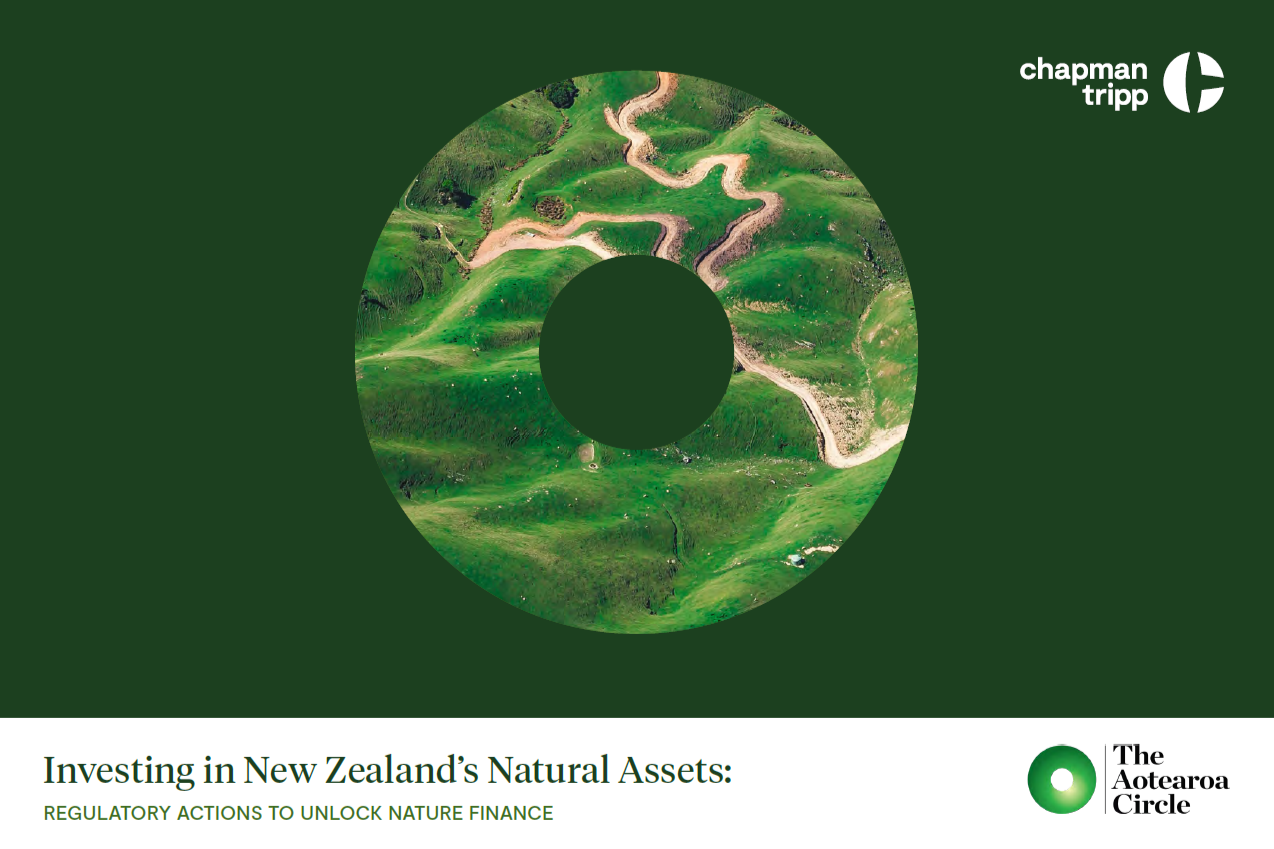
The report, titled Investing in New Zealand’s Natural Assets: Regulatory Actions to Unlock Nature Finance, reveals that while there is strong interest in voluntary projects benefiting nature or the environment, 52% of those surveyed have had to abandon or postpone projects due to a mix of financial and non-financial obstacles. Notably, nearly three-quarters of respondents identified legal or regulatory barriers as key impediments to getting nature investment off the ground, on par with those citing funding difficulties. The RMA regime was identified as the single greatest source of barriers.
“The RMA and the wider resource management system were the most frequently cited sources of regulatory barriers, with more than half of respondents indicating that the RMA directly hindered their ability to invest in natural assets,” says Alana Lampitt, Partner at Chapman Tripp and one of the report’s lead authors. “While access to funding remains a major challenge, our research highlights that practical regulatory issues are also significant factors deterring much-needed investment.”
The report underscores the urgent need to leverage ongoing law reform processes to bring greater vision, coherence, and innovation to New Zealand’s regulatory framework to better enable investment in the country’s natural assets and infrastructure. New Zealand’s economy is deeply reliant on natural capital. Food, fibre, forestry, fisheries, and tourism - all underpinned by land, water, and biodiversity - collectively account for more than half of the nation’s export earnings and a significant share of GDP. Yet despite this dependence, capital flows into nature-positive projects remain limited.
Chapman Tripp’s report focuses on practical, on-the-ground legal barriers that collectively become major roadblocks, significantly increasing costs, limiting returns, and, in some cases, rendering projects unviable.
“Our research and engagement revealed that seemingly small and isolated regulatory issues can significantly increase operating costs and impact potential returns on these ‘Natural Asset Investments’,” says Kate Wilson Butler, Chapman Tripp’s Director of Climate, Sustainability & ESG and co-lead author of the report. “Collectively, these minor irritants can become major roadblocks to investment, leaving potential economic and environmental value on the table – including jobs, climate resilience, and a stronger economy.”
To address these challenges, the report sets out six categories of legal and regulatory reform actions to unlock additional voluntary private sector investment and ensure investment dollars achieve greater impact for New Zealand’s natural assets. These include:
1. Improved data-informed prioritisation of voluntary actions that can support New Zealand’s Biodiversity Strategy and aligning those priorities throughout national and local planning policy.
2. Building a more enabling consenting system for natural asset investments that makes projects easier, faster, and cheaper to implement.
3. More readily recognising voluntary offsite natural asset investments as an available method to mitigate on-site development impacts.
4. Adjusting policies (including the Emissions Trading Scheme) to encourage more native forest planting by reducing costs and increasing returns.
5. Better enabling foreign investment in permanent native forestry.
6. Ensuring property rights meet the specific requirements of natural asset investments, including to enable nature credit markets.
“We recognise this list of actions is complex and elements have data dependencies that will take time to be implemented,” says Alana Lampitt. “Others, particularly actions two and three, relate to the RMA, and have the potential to be prioritised and rolled out within 12-18 months as part of the government’s current reform programmes.”
Vicki Watson, Chief Executive of The Aotearoa Circle, says the current reform of the RMA and the wider resource management system presents a real opportunity to integrate nature investment across our regulatory settings.
“As our natural capital – the fuel of our economy – continues to degrade, tackling investment barriers is urgent. If we want to create lasting value – enduring prosperity - for Aotearoa New Zealand, then we must make it far easier for government, business, and philanthropy to invest in nature.”
The report’s findings are also informing the development of the first Natural Infrastructure Plan for Aotearoa New Zealand by The Aotearoa Circle and public and private sector partners. The plan is due for release in March 2026 and will set out a business case and framework for scaling up investment in natural infrastructure for stronger economic and environmental returns.

-48.jpeg)