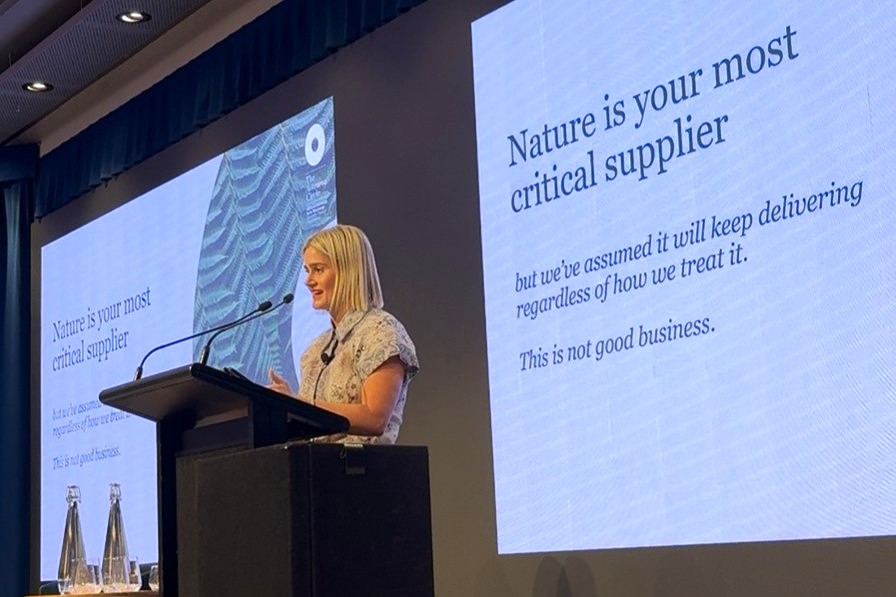
By Izzy Fenwick
Imagine your CFO comes to you tomorrow and says:
“We’ve got a serious problem. We’ve just discovered that a significant percentage of the company’s long-term value relies on a single supplier.
“We didn’t realise it until now because they deliver such a wide range of services, but we’ve just learnt they all traces back to the same parent company.
“We’ve never done proper due diligence on them because they’ve been our supplier since the very beginning.
“We’ve never stress tested their capacity or invested in their development.
“And we’ve actually been underpaying them — or more accurately, haven’t yet really paid them at all – their invoices got lost in the mail and now they’re showing signs of failure.
“There’s no alternate vendor. No one can do what they do.
“And if we had to try recreate what they provide, it would cost billions in capex and require infrastructure we simply don’t have — and never actually could….”
What would your reaction be? And what would the conversation be around the board table?
Because that’s your business’s current relationship with nature.
No business operates in a vacuum. Every company, in every sector, ultimately depends on healthy natural systems to function.
In simple business terms, nature is your most critical supplier.
Nature Ltd is made up of several highly specialised departments.
To name a few, we have the:
The water division which handles everything from sanitation to processing, cooling systems, and hydration. Without them, productivity dries up - literally.
Climate and air services - delivers stable temperatures, breathable air and protects asset lifespans. Their work ensures your operations aren’t choked up.
The soils and land management team keeps land productive, manages drainage, reduces flood risk and supports food chains. They’re your flood mitigation contractor, erosion control officer and yield optimiser, all in one.
The biodiversity unit is responsible for pollination, pest control, genetic resilience and disease buffers. They don’t just keep the food chain intact; they keep your supply chains functioning.
Nature Ltd is your most essential supplier.
And no business would survive if it treated a critical supplier the way we treat nature.
No board would tolerate the risk profile we’ve accepted here, a single-source supplier, massively underfunded, visibly degrading, with no backups, no contingency and terrible relationship management.
We’ve wrongly treated nature as a free, infinite, ever-renewing supplier. But that illusion is now unravelling.
But nature doesn’t just walk off the job quietly. It sent in the debt collector climate change, bringing billion-dollar weather events, impacting insurance, supply chains and stranding assets, wiping value off balance sheets overnight.
Boards that fail to recognise this are missing the most basic principle of commercial resilience: lose your critical supplier and you lose your ability to deliver value.
Or worse, underpay or exploit a supplier and you can end up in court, in the headlines, or in serious breach of contract.
This isn’t about charity, it’s about futureproofing and strengthening your economic resilience.
I know, over the last few years, many of you have invested heavily in understanding this debt collector – climate change.
It’s become a mandatory governance priority with scenario analysis and disclosures now core board business.
But the truth is: climate is just the atmospheric expression of a far bigger natural system. If climate is the lighting, nature is the entire stage your business performs on.
And if that stage, our soils, water systems, ecosystems collapses, it doesn’t matter how well you manage the lighting the show will not go on. Your business will collapse.
The good news? Many nature-based solutions do double duty:
Wetlands buffer floods and sequester carbon.
Native trees stabilise soils and become long-term carbon sinks.
Strengthening ecosystems reduces insurance and compliance risks and helps meet emissions targets.
So, investing in nature isn’t a competing priority. It’s a cost-effective way to do both.
You might be thinking, yeah but is our stage really at risk of collapsing… And you wouldn’t be alone in thinking that. You would be wrong, but you wouldn’t be alone.
Our stage is massively exposed.
Physically New Zealand faces some of the steepest nature-related physical risks in the OCED. Our short, fast rivers, steep erodible hill country and storm-vulnerable coastlines make us uniquely prone to flooding, slips, and water contamination.
In 2022, weather related insurance costs were at an unprecedented $335m, breaking the previous record of $305m in 2021.
In 2023 it was $2b. So, 2022 broke 2021 records and 2023 blew them out of the water. We might have the odd quiet year, but that pattern is going to continue.
We are also financially exposed. NZSE is one of the highest levels of nature dependency in the world - 75% of NZX market capitalisation is made up of companies with moderate to high dependency on nature.
And we are reputationally exposed. We’ve staked our brand on being clean, green, and nature rich. That’s how we earn price premiums and market access.
Last year, The Aotearoa Circle and Chapman Tripp, analysed our key trade relationships and found that over 70% of our export value now goes to countries with mandatory or emerging climate or nature requirements.
That means poor environmental performance doesn’t just hurt our ecosystems, it risks being priced out of global markets altogether.
And the reality is, these risks are already materialising. Our soils are eroding at rates that would shock most OECD peers.
In just one year, 182 million tonnes washed into rivers taking future farm valuations, insurance viability and EBIT with them.
Nearly half our monitored groundwater sites show nitrate levels trending up. 12% have breached drinking water safety at least once.
And it’s not just dairy or vineyard companies we’re talking about here. Water is essential for sanitation, processing, cooling systems, hydration. There are few things on the planet not reliant on water in some way shape or form.
And our native ecosystems that once filtered water and stabilised climate? Less than 30% remains.
When we start looking at these declines, the erosion, the nitrates, the biodiversity loss, it’s natural to think how much of this is really our problem? How much did we contribute to this? Maybe we just inherited these issues? The classic causation versus correlation debate. And they’re fair questions.
But at the end of the day, when your aquifer is contaminated, or insurance premiums double, or the hillside above your asset gives way, it will make no difference whether you caused it or simply inherited it.
The capital markets don’t care. The insurers don’t care. The regulators tightening standards don’t care. They’re pricing the exposure, whether it’s legacy, cumulative, or directly yours.
And your fiduciary duty isn’t to argue causation. It’s to ensure your business is resilient enough to withstand the consequences.
Lloyds of London, the largest insurance market in the world, ranks New Zealand as the second riskiest country on the planet primarily due to our vulnerability to natural disasters and what that will mean for our economy.
They aren’t allocating blame. They’re allocating risk. And that’s global capital markets telling us exactly where they see the risk.
Premiums are rising. Coverage is retreating. Banks and investors are embedding nature factors into lending covenants and valuations.
If these exposures aren’t on your risk register, if your board hasn’t tested what nature decline means for asset values, insurance availability or compliance costs, how can you say you’re meeting your fiduciary duties?
So, what should you do?
First, update your risk registers and scenarios. And not a token line item, a serious mapping of how all the risks to your business and supply chain.
Risks around losing your local aquifer to nitrate contamination, of insurers pulling out after repeated slips or floods.
What’s the scenario implications for your balance sheet when reoccurring flooding impacts logistics routes, or ruins a year’s supply of stock?
Second, lift your board’s capability. Just like you’ve invested to understand climate, start getting briefings on local ecosystems, insurance positions, and how nature decline translates into financial exposure.
Third, push management for hard data and science-based plans. Not vague biodiversity statements. Frameworks like TNFD are surfacing for exactly this reason: to give you a structured way to assess nature-related risk.
And fourth engage your insurers and lenders now. Ask them what nature risks they’re already embedding in premiums and lending terms. That’s the market telling you exactly where your exposures lie.
Let me paint you a picture of a board that’s doing this well:
They’ve mapped where their business depends on nature, across water, land, biodiversity, and ecosystems.
They’ve brought in external expertise to assess physical risks; not just climate, but erosion, runoff, supply chain vulnerabilities.
They’ve pressure-tested their assumptions. What happens if a key river dries up, or flood risk changes zoning, or biodiversity collapse disrupts pollination or pest control?
They’re not waiting for insurers to tell them what’s uninsurable; they’re starting that conversation now.
They’ve embedded TNFD into their enterprise risk management system - not just as a compliance tick-box, but to build resilience.
They’re not waiting for perfect data or a regulatory mandate.
They’re acting now because they understand that the costs of inaction grow exponentially over time.
And last but not least, they’re working with system-level organisations, like The Aotearoa Circle, because they understand that no single business can fix a degraded ecosystem alone. Nature loss is a shared risk and shared risks demand coordinated responses.
If you take one thing from today, let it be these questions. They’re the questions I’d be asking if I was in your board meetings?
Where is our business dependent on nature and how secure are those ecosystems?
Your water sources, soils, biodiversity, local climate, how stable are they really?
How is nature decline already showing up on our balance sheet?
Through insurance premiums, compliance costs, productivity hits, or financing conditions.
Do we understand how nature decline could concentrate risk across multiple parts of our business at once?
Not just local assets, but also suppliers, logistics, market perception, insurance all tightening simultaneously.
What assumptions are baked into our strategy that depend on nature continuing to deliver for free?
Cheap water, stable weather, reliable land productivity, low premiums, are these quietly propping up our forecasts?
Are we confident we’re meeting our fiduciary duty by actively governing these risks, not just reporting on them?
Because waiting until it shows up as a stranded asset or compliance order is simply too late.
Those questions alone will drive far better long-term outcomes for your businesses. This is not about charity or reducing harm for its own sake. It’s about futureproofing and strengthening your economic resilience.
Because it is an illusion to believe our economy can stand on a degrading environment.
Foresight isn’t fearmongering, it’s governance. And the directors who act on it will be the ones remembered for steering their organisations through the age of ecological risk.
Your role is to steward long-term value.
That means asking not just how your company impacts nature, but how nature impacts your company. And what you’re doing about it.
Because when the board minutes are written, and the risks are realised, it will be clear who saw this coming and who chose to act.
And one day, nature will be on your risk register, either by choice or by force.
And when that day comes, the question won’t be “did we know?”
It will be: “Why didn’t we act sooner?”

-48.jpeg)
-47.jpeg)