By Aaron Hewson, Rangatahi Advisory Panel Member, AGMARDT
The views expressed by Aaron are his own and do not necessarily reflect the opinions or positions of our multi-year premium Partner, AGMARDT, whom Aaron represents.
I first came across The Aotearoa Circle through their Modern Gene Technologies report last year. I was really inspired by how collaborative, and systems focused their work is.
I wanted to join the RAP because it connects the private and public sectors in a way that actually gets things done. So much good work happens in isolation, but the panel allows me to bring my scientific expertise and academic perspective to real-world challenges. At the same time, I’m learning about governance, policy, and business, which helps me think about how to make meaningful impact beyond the lab.
The opportunity to join the RAP came about through Future Farmers, a group I’m part of that’s supported by AGMARDT. It immediately felt like a good fit - interdisciplinary, future-focused, and collaborative. AGMARDT’s key strategic priorities are building capability and backing bold ideas and initiatives. They want to support the capability of sector Rangatahi, and they see me as being able to help contribute a food and fibre sector perspective to the Circle’s work.
The alignment between AGMARDT’s and the Circle also resonates with me - tackling the complex systems work required to protect and restore Aotearoa’s natural environment, which is vital to the wellbeing of our people, our sector and nation’s future prosperity. I’m also AGMARDT’s first RAP representative which is a huge honour also.
I’m also doing a Master of Science in Plant Biotechnology at Otago University and the Bioeconomy Science Institute, researching heritage apple collections. This comes after completing two undergraduate degrees - a Bachelor of Arts in Religious Studies and Asian Studies, and a Bachelor of Science in Agricultural Innovation and Plant Biotechnology.
I’ve always enjoyed exploring lots of diverse fields, and my mix of humanities and science helps me bring unique ways of thinking to the RAP. It enables me to consider big-picture systems, communities and people alongside research and data.
What excites me most about the RAP is how genuine the collaboration is. Our voices get woven into projects like the Natural Infrastructure Plan. It’s not just consultation - it’s real influence. Everyone brings a unique perspective, yet we all share a passion for New Zealand’s future.
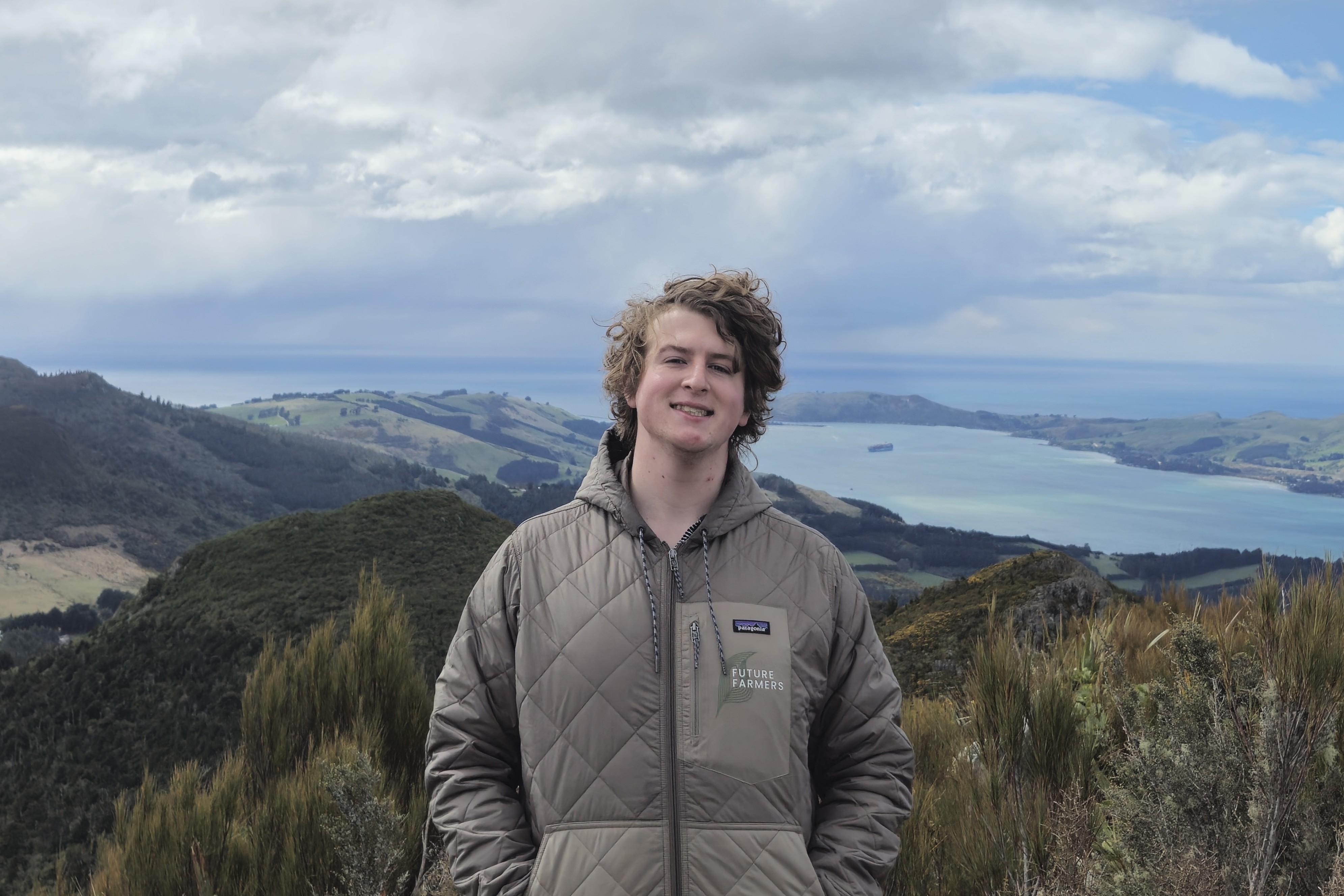
Being an academic rather than a corporate employee means I can offer a voice slightly removed from the business world. I hope to bring different ways of thinking, bridge research with practice, and help turn ideas into action.
Personally, the RAP is an opportunity to gain a systems-level perspective, to see how science intersects with policy and governance, and explore how I can make a real impact. I want to be able to speak both languages - the academic and the practical - so I can contribute to meaningful, positive change for Aotearoa.
For the future of New Zealand, I want people to feel a deep connection to nature. Once we see ourselves as part of ecosystems, rather than separate from or exploitative of them, many ecological challenges start to solve themselves. I’m also passionate about reconnecting people with food and land, especially in urban areas. Understanding where food comes from, how ecosystems work, and connecting with the whenua can help repair our relationship with nature.

-48.jpeg)
-47.jpeg)