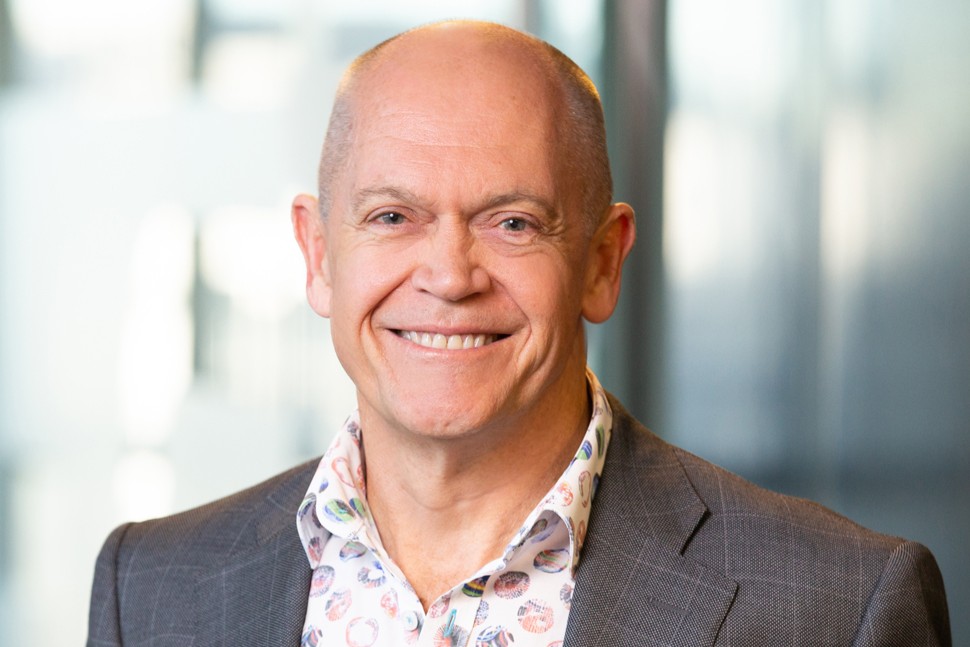
Circle Guardian David Carter challenges the idea that prosperity must come at nature’s expense. Read his perspective on how regenerating our ecosystems could create opportunities that benefit everyone.
By David Carter, Guardian, The Aotearoa Circle
My own connection to the environment began on the water.
My family has always been in love with it - my grandfather spent much of his life afloat on the Hauraki Gulf, as did my father and similarly have I, from before I could walk. Our family has always had boats of various shapes and sizes, and I know that I need to be able to smell and see the sea from wherever I live.
Growing up with that connection meant spending countless hours exploring the Hauraki Gulf, Great Barrier Island, and further afield, from the Mercury Islands to Karikari Peninsula in the north. Great Barrier, in particular, remains my spiritual home - Port Fitzroy is a place that feels timeless, where you can hear the birdlife, dive, fish, and truly connect with nature.
That love of the water, and the outdoors has shaped the way I see New Zealand’s natural capital.
Over time, I’ve observed both decline and regeneration. When I was a teenager, snorkelling for crayfish at Great Barrier, they were abundant. Mere decades later, during my 40s, the rate of depletion was obvious. So much so that leading ecologists are now describing them as functionally extinct in the Gulf. The ocean surface may look the same, but beneath it, ecosystems have collapsed in ways that adversely affect not only our “once” wealth of biodiversity but also economic and social opportunities for our country.
Yet the story is not all loss.
We’ve seen remarkable examples of nature’s resilience when it is given a chance to recover. My wife’s family’s property borders the regional park at Tāwharanui. Over the years, we’ve watched bird populations flourish thanks to predator fences and sanctuaries. At places like Tiritiri Matangi and Little Barrier Island, offshore sanctuaries, act as nurseries allowing birds and other wildlife to prosper and gradually return to the mainland.
One challenge with nature is understanding what we have lost, and continue to lose, without experiencing it first hand - crayfish for example. We tend to think of Aotearoa New Zealand as being “green” because we have lawns and lots of pasture. But imagine if we could bring abundant flora and fauna, raucous birdlife and canopy forests, back into places like Tamaki Makaurau by circling the city with a series of sanctuaries and interconnecting green corridors. We can see that if we give nature half a chance, it can rebound, and it can do so for everyone, spreading benefits beyond the immediate protected areas
Regenerating ecosystems so that all New Zealanders can benefit.
That principle shapes how I think about regeneration. I’m less interested in “protecting or ring-fencing” nature in museums or sanctuaries, in some senses further isolating us from it. Rather I am much more interested in regenerating ecosystems so that all New Zealanders can benefit, whether through recreation, sustainable harvesting, catching crayfish in waist deep water, or simply experiencing thriving landscapes in our backyard.
Imagine a thriving Hauraki Gulf, kina barrens replaced with kelp forests, healthy mussel beds - replacing muddy bottoms, filtering our seawater and providing a thriving nursery - where sustainable fishing both recreational and commercial, is possible again. Imagine urban parks and forests providing habitat for birds and other species while still being accessible for families and communities, imagine kiwis in our backyards, just as we can now readily see them at night inside the Tauwharanui Reserve. The potential is enormous, and the tangible benefits would be felt economically, environmentally and socially.
Coming from an engineering background, I can understand the logic that, “things that get measured get done”. Hence the drive for greater reporting around climate and nature impacts/risks for businesses, not to mention, our access to export markets demands this from us.
For substantial organisations, it is practical to employ the capability needed to measure and report on these impacts and there is an onus on these businesses to do so. However, New Zealand is largely made up of SMEs, for which the impost of reporting, let alone investing in environmental initiatives at scale is impractical.
That’s why collaboration is key - sharing best practices of an appropriate scale, enabling smaller companies to collaborate with larger firms and providing guidance is critical. When we work together, the benefits of natural capital restoration are shared widely – a benefit for all of us.
Yes, regeneration requires a long-term, strategic vision as nature cannot be restored overnight. It requires 10, 20, and 30-year thinking, along with alignment across political cycles. However, we also know that if the right foundations are laid, nature itself does much of the heavy lifting, day in, day out.
Governments have a vital role in setting consistent policy frameworks, just as private enterprise needs to play its part by investing and developing responsibly. Without confidence in stable settings, long-term investments in restoration, sustainable forestry, or regenerative agriculture are understandably held back. But when policy, business, and communities align, we can create opportunities for employment, economic prosperity, and ecological renewal simultaneously.
Ambition is key, bold ambition even better.
We know regenerating native forests on hillsides, even better on marginal land, minimises erosion, helps reduce flood risk, and can provide sustainable timber opportunities in the longer term without compromising ecosystems. New Zealand’s forestry assets are huge but presumably increasingly exposed to fire risk through global warming – is there the potential to use native forests as natural fire breaks, rather than simply cutting an empty swathe? The challenge is to create solutions that work for people and nature together, not in opposition.
Unlocking our country’s full potential lies in thinking boldly about both regeneration and growing a productive economy, integrating nature into everyday life, and providing opportunities for everyone to benefit from it.
It’s achievable, it’s practical, and it’s our responsibility. Yes, the work will be challenging, but with ambition, collaboration, and long-term vision, New Zealand can become a world leader in how businesses, government and communities regenerate natural capital while helping to ensure that everyone prospers.
-48.jpeg)
-47.jpeg)